
Onaroll dashboard app - A management system for franchisers & employee rewards
Industry
Tech, Data management
Client
McDonald's Franchises
Year
(2022-2024)
Role
UX / Product Design lead
Product design lead
Year
(2022-2024)
01 - Challenge
01
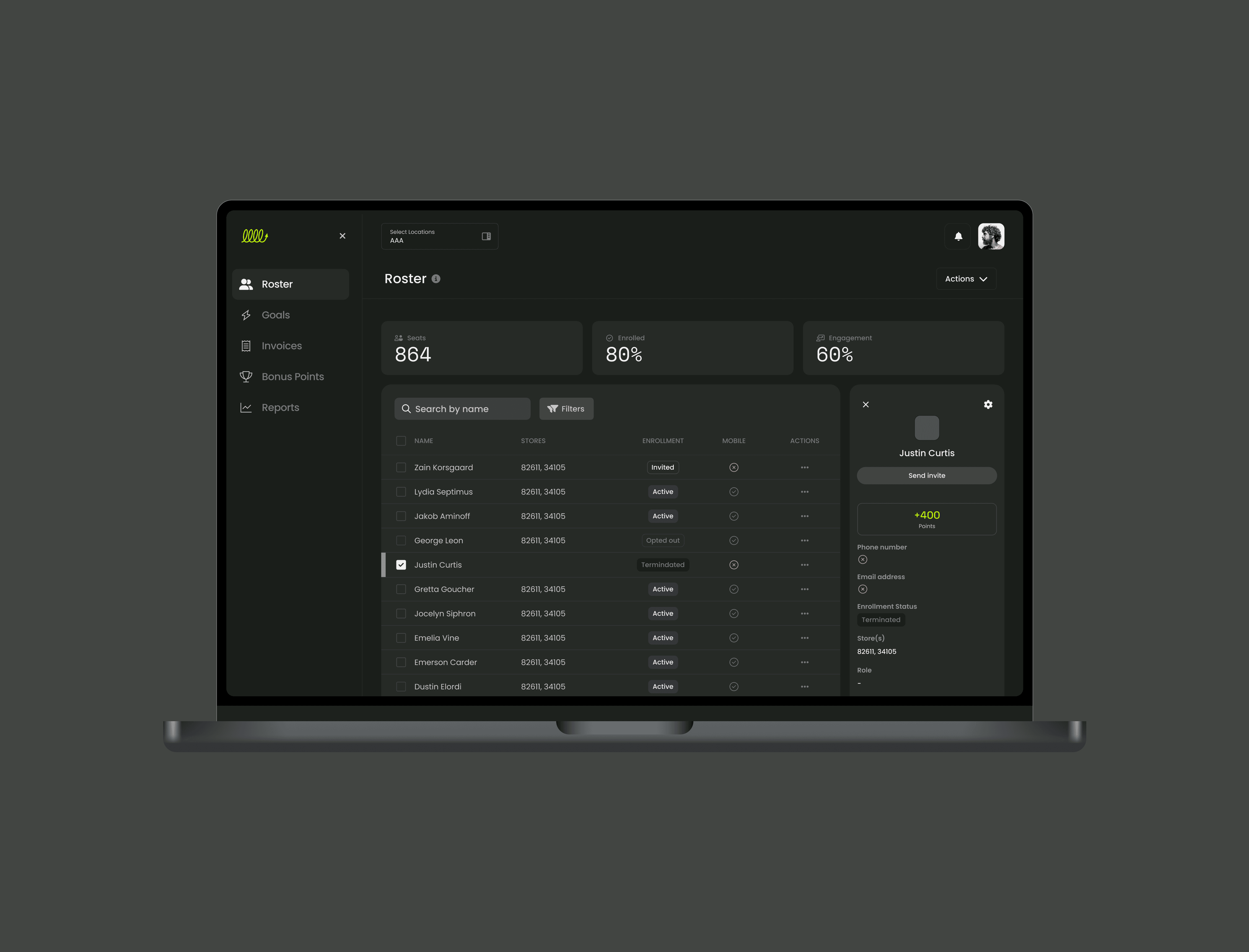
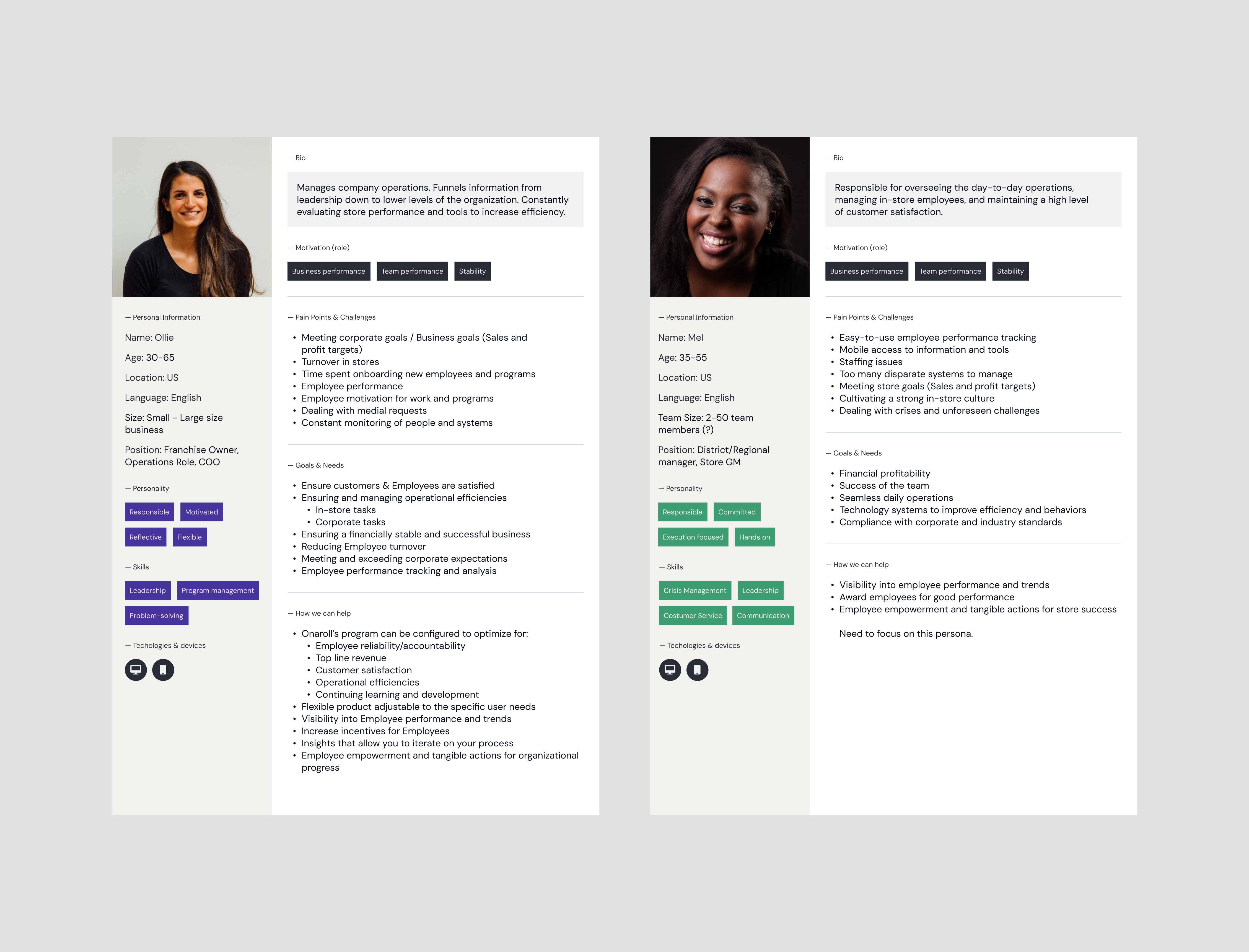
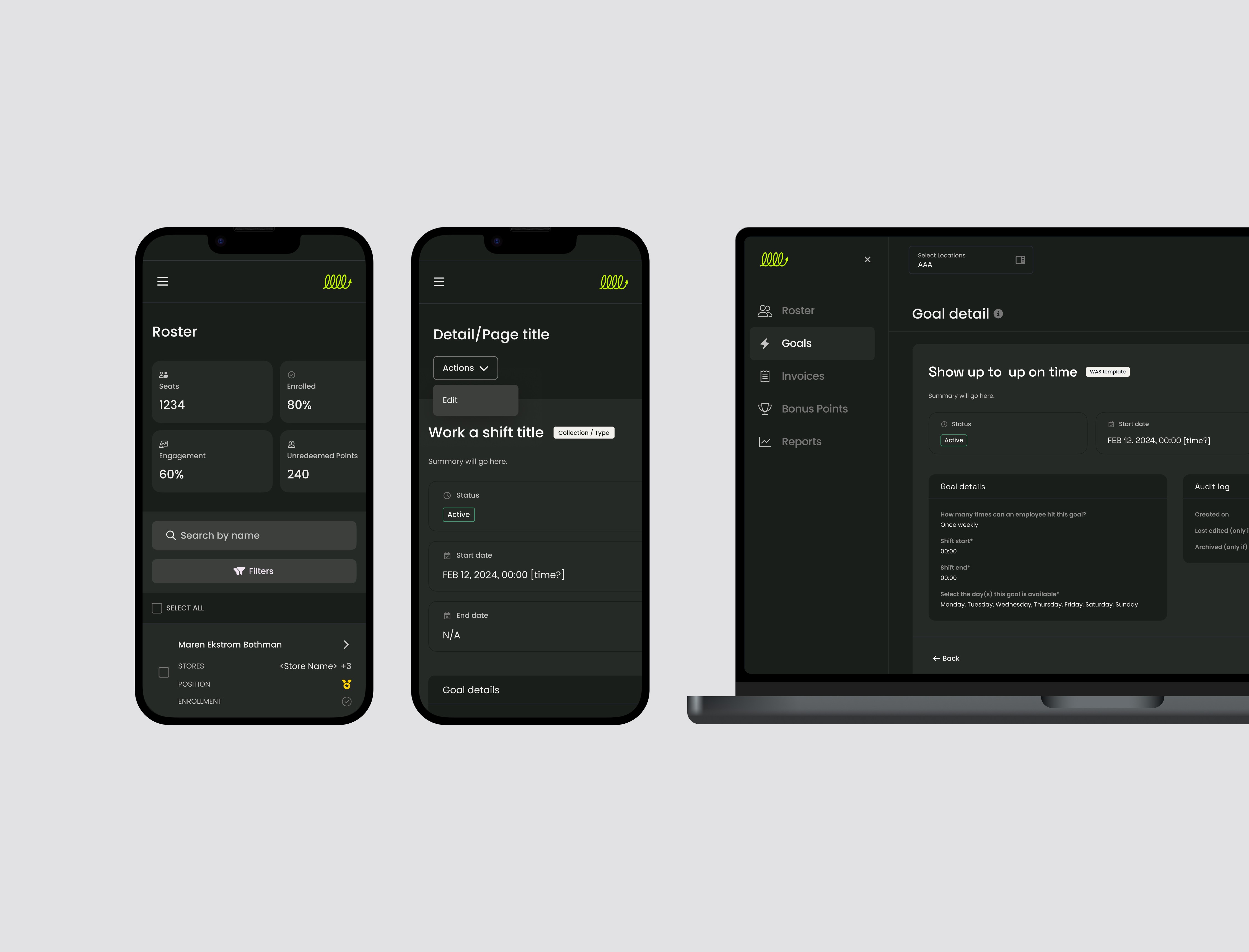
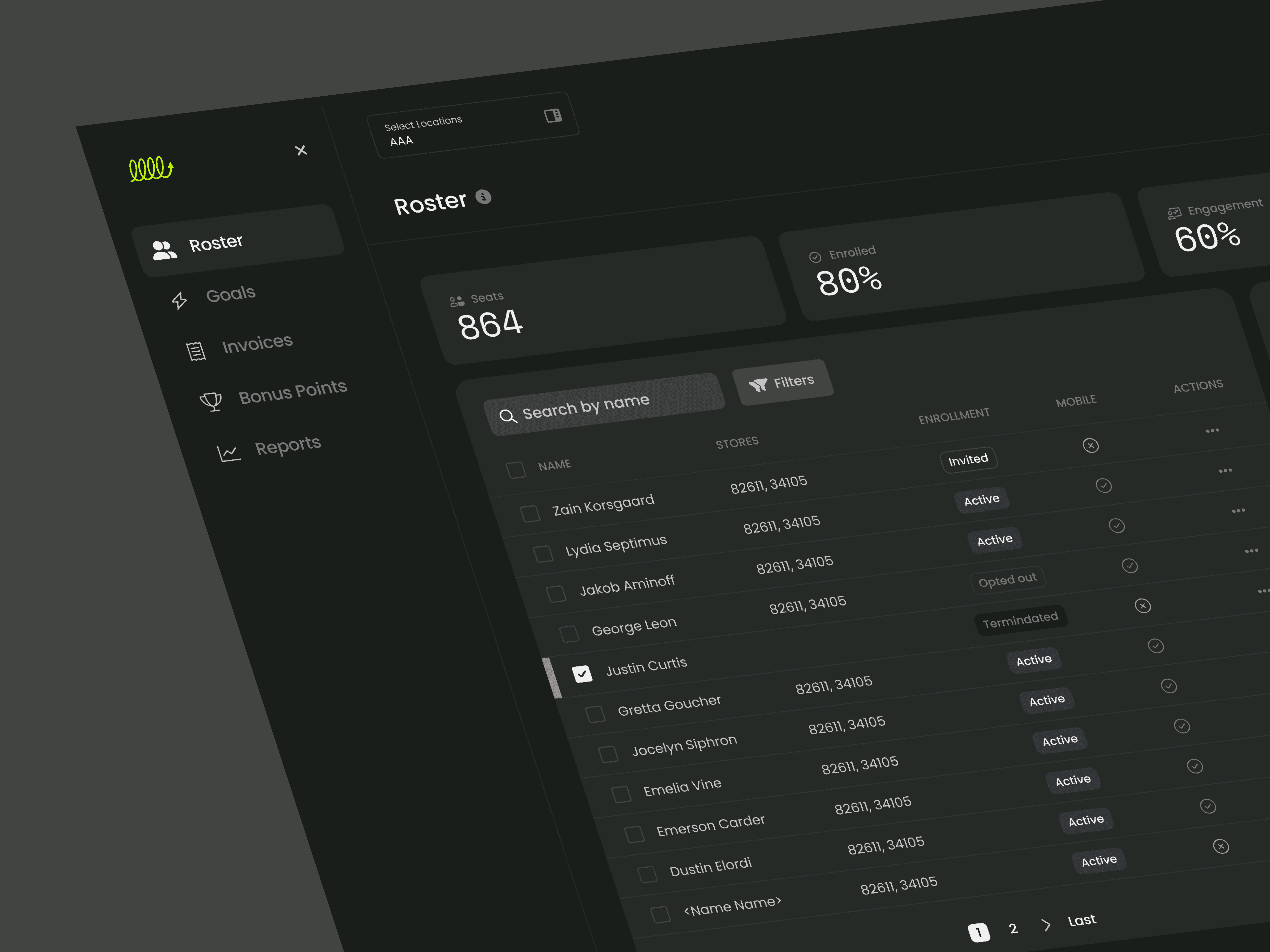
McDonald's franchisers and quick service operators were managing their workforce through manual, disconnected processes. Onboarding, goal setting, point distribution, and termination were all handled without a unified system. The result was administrative overhead that scaled poorly, limited visibility into retention, and no clear way to measure the ROI of Onaroll's core programs. The business needed a management platform that could serve operators, managers, and team leaders across complex organizational hierarchies, with each role requiring a meaningfully different experience.
McDonald's franchisers and quick service operators were managing their workforce through manual, disconnected processes. Onboarding, goal setting, point distribution, and termination were all handled without a unified system. The result was administrative overhead that scaled poorly, limited visibility into retention, and no clear way to measure the ROI of Onaroll's core programs. The business needed a management platform that could serve operators, managers, and team leaders across complex organizational hierarchies, with each role requiring a meaningfully different experience.
McDonald's franchisers and quick service operators were managing their workforce through manual, disconnected processes. Onboarding, goal setting, point distribution, and termination were all handled without a unified system. The result was administrative overhead that scaled poorly, limited visibility into retention, and no clear way to measure the ROI of Onaroll's core programs. The business needed a management platform that could serve operators, managers, and team leaders across complex organizational hierarchies, with each role requiring a meaningfully different experience.
03 - Process
03 - Process
03
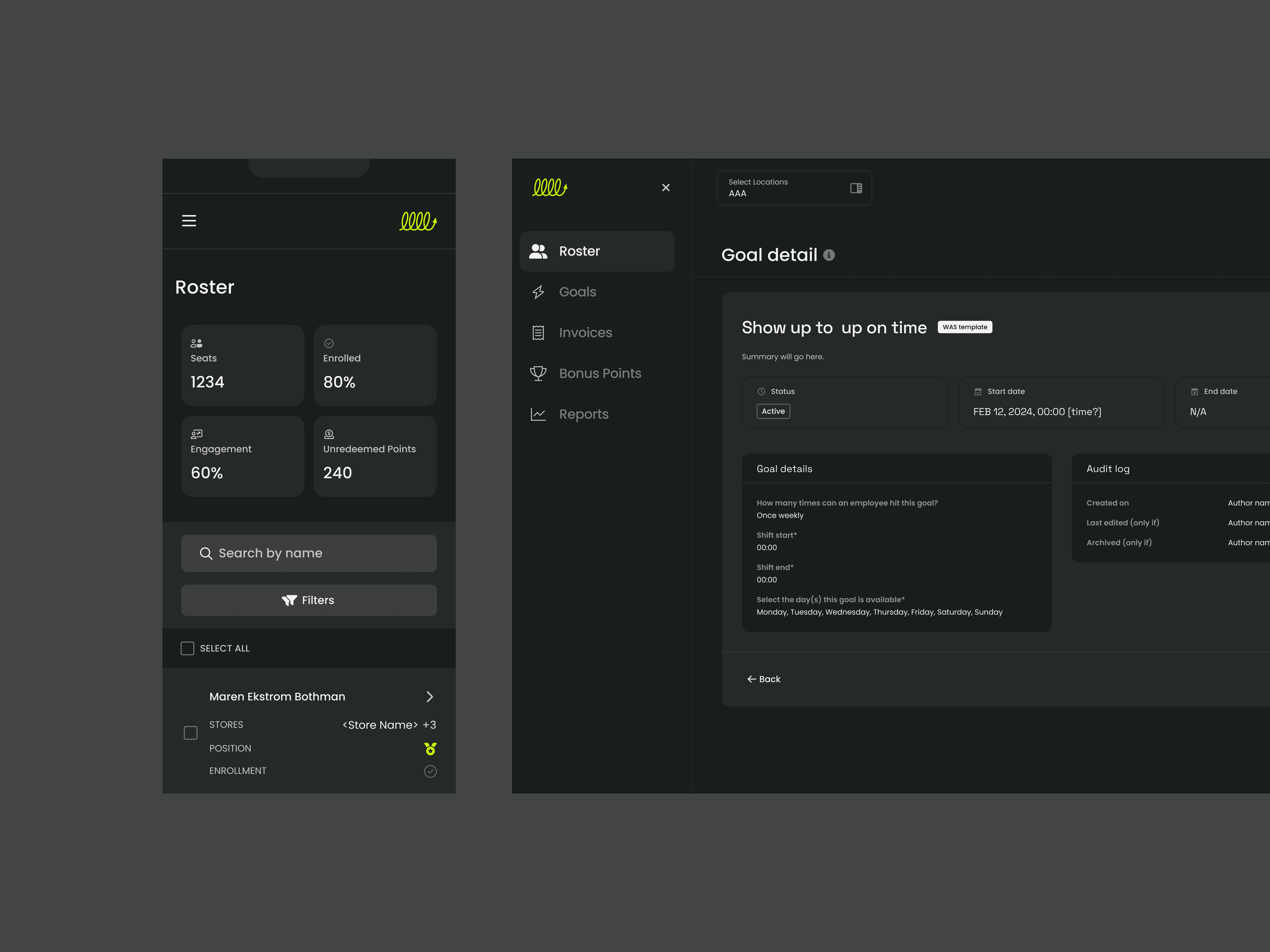
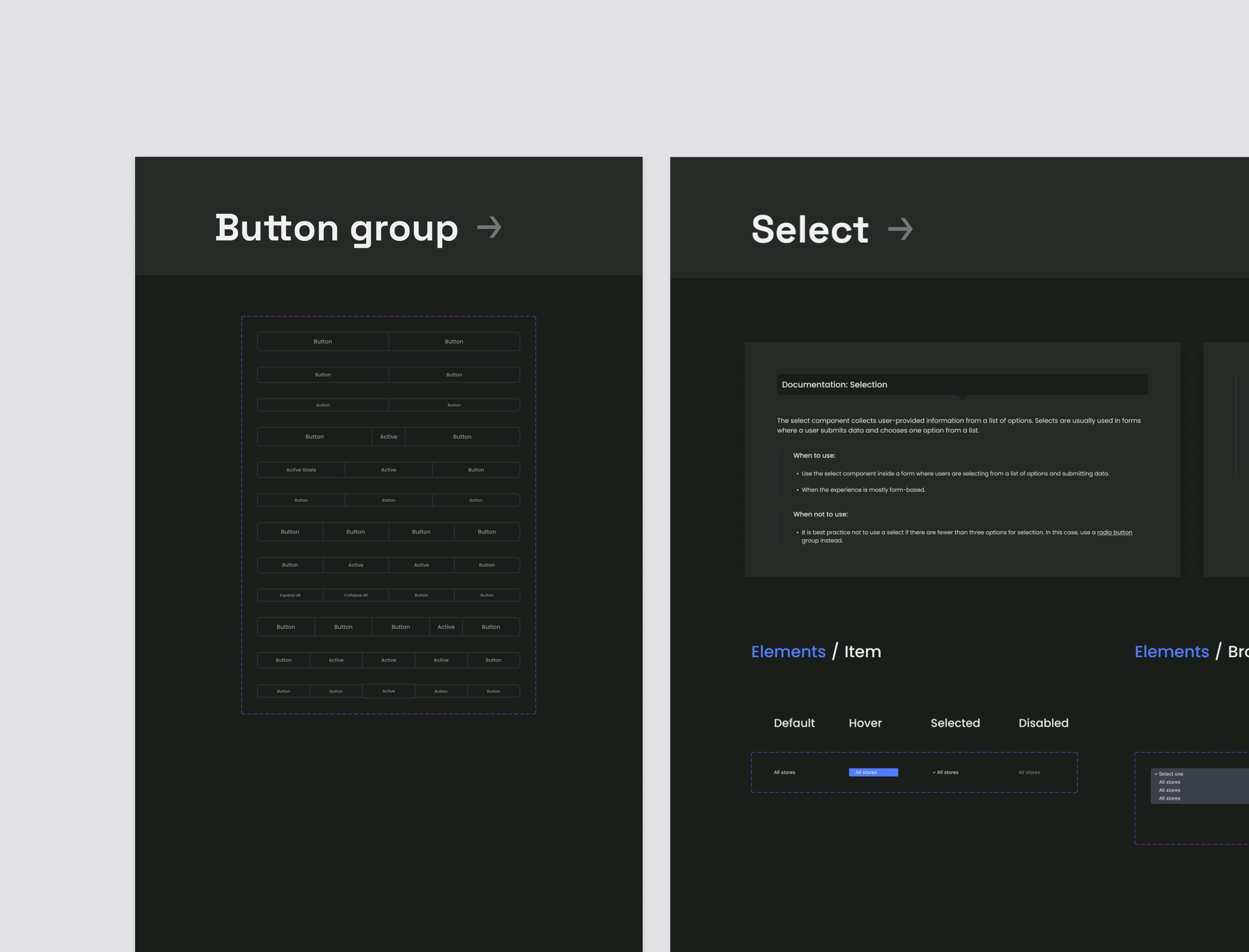
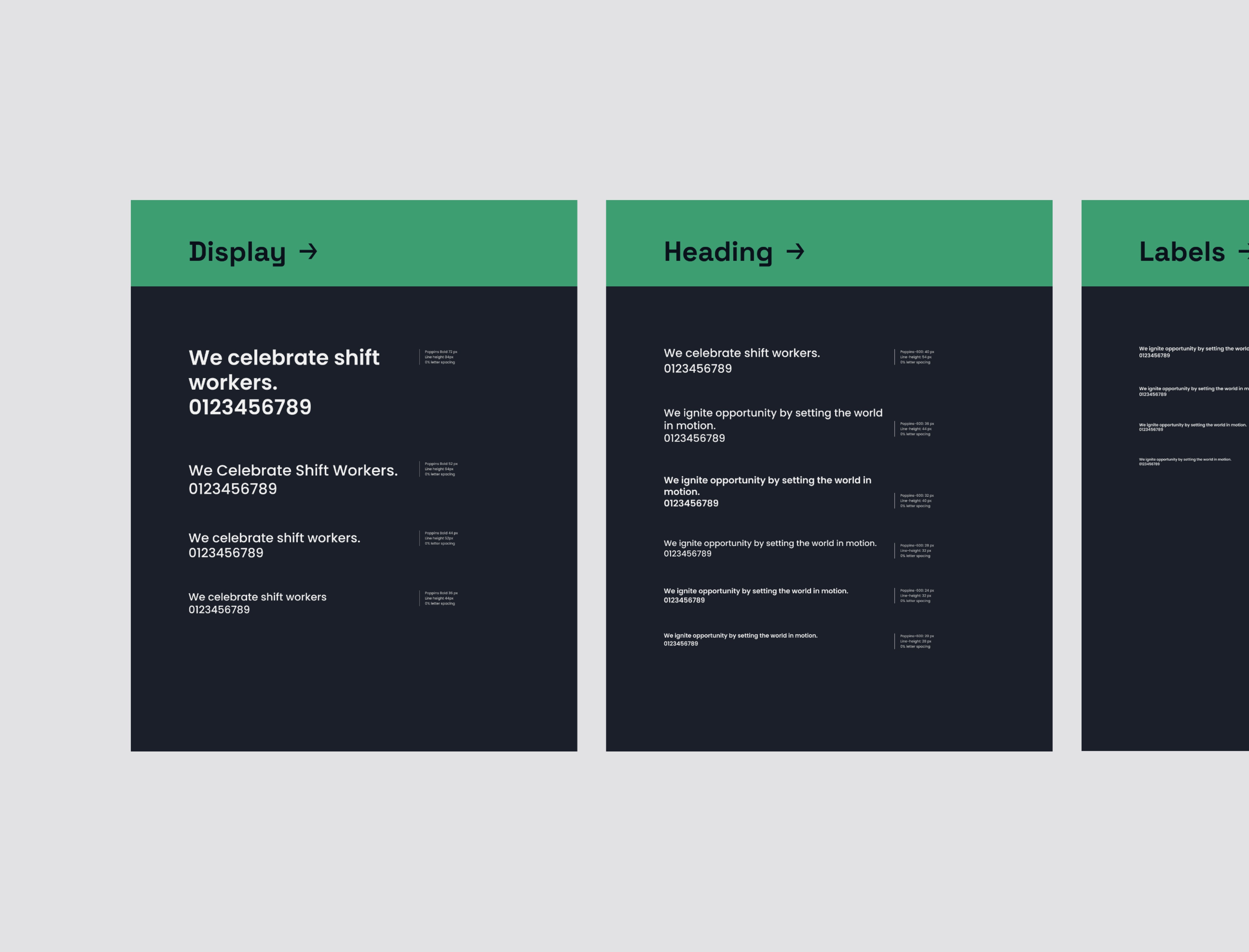
Beyond the product work, I took on significant process and team leadership responsibilities at Onaroll. I restructured the product and design org into dedicated pods. One for internal tooling, one for the dashboard, one for the app, allowing designers to specialize and move faster without context switching. I introduced and led a weekly goal-setting ritual with the Head of Product that aligned design output with product priorities, keeping the team accountable and the roadmap visible. I also created the component library governance process, establishing clear guidelines for UI consistency, ADA compliance, and design-to-dev handoff. We used Chakra as our main base library. I owned roadmap contribution alongside product leadership, translating user research, market signals, and business priorities into a sequenced design backlog.
Beyond the product work, I took on significant process and team leadership responsibilities at Onaroll. I restructured the product and design org into dedicated pods. One for internal tooling, one for the dashboard, one for the app, allowing designers to specialize and move faster without context switching. I introduced and led a weekly goal-setting ritual with the Head of Product that aligned design output with product priorities, keeping the team accountable and the roadmap visible. I also created the component library governance process, establishing clear guidelines for UI consistency, ADA compliance, and design-to-dev handoff. We used Chakra as our main base library. I owned roadmap contribution alongside product leadership, translating user research, market signals, and business priorities into a sequenced design backlog.
Beyond the product work, I took on significant process and team leadership responsibilities at Onaroll. I restructured the product and design org into dedicated pods. One for internal tooling, one for the dashboard, one for the app, allowing designers to specialize and move faster without context switching. I introduced and led a weekly goal-setting ritual with the Head of Product that aligned design output with product priorities, keeping the team accountable and the roadmap visible. I also created the component library governance process, establishing clear guidelines for UI consistency, ADA compliance, and design-to-dev handoff. We used Chakra as our main base library. I owned roadmap contribution alongside product leadership, translating user research, market signals, and business priorities into a sequenced design backlog.
04 - Results
04
Automated roster management processes reduced administrative overhead for franchise operators by 20%. HR managers gained access to data and insights that previously did not exist, enabling better decisions around retention thresholds and program investment. The design team structure I introduced improved specialization and throughput, and the component library I established became the foundation for all subsequent dashboard development. User feedback collected post-launch drove a second round of targeted feature improvements, directly improving usability scores and franchise operator satisfaction.
Automated roster management processes reduced administrative overhead for franchise operators by 20%. HR managers gained access to data and insights that previously did not exist, enabling better decisions around retention thresholds and program investment. The design team structure I introduced improved specialization and throughput, and the component library I established became the foundation for all subsequent dashboard development. User feedback collected post-launch drove a second round of targeted feature improvements, directly improving usability scores and franchise operator satisfaction.
Automated roster management processes reduced administrative overhead for franchise operators by 20%. HR managers gained access to data and insights that previously did not exist, enabling better decisions around retention thresholds and program investment. The design team structure I introduced improved specialization and throughput, and the component library I established became the foundation for all subsequent dashboard development. User feedback collected post-launch drove a second round of targeted feature improvements, directly improving usability scores and franchise operator satisfaction.