Transforming Trainual into an AI-Driven Product Experience
Industry
SAAS, LMS
Client
Trainual, Inc
Year
(2026)
Role
UX / Product Design lead
Product design lead
Year
(2026)
01 - Challenge
01
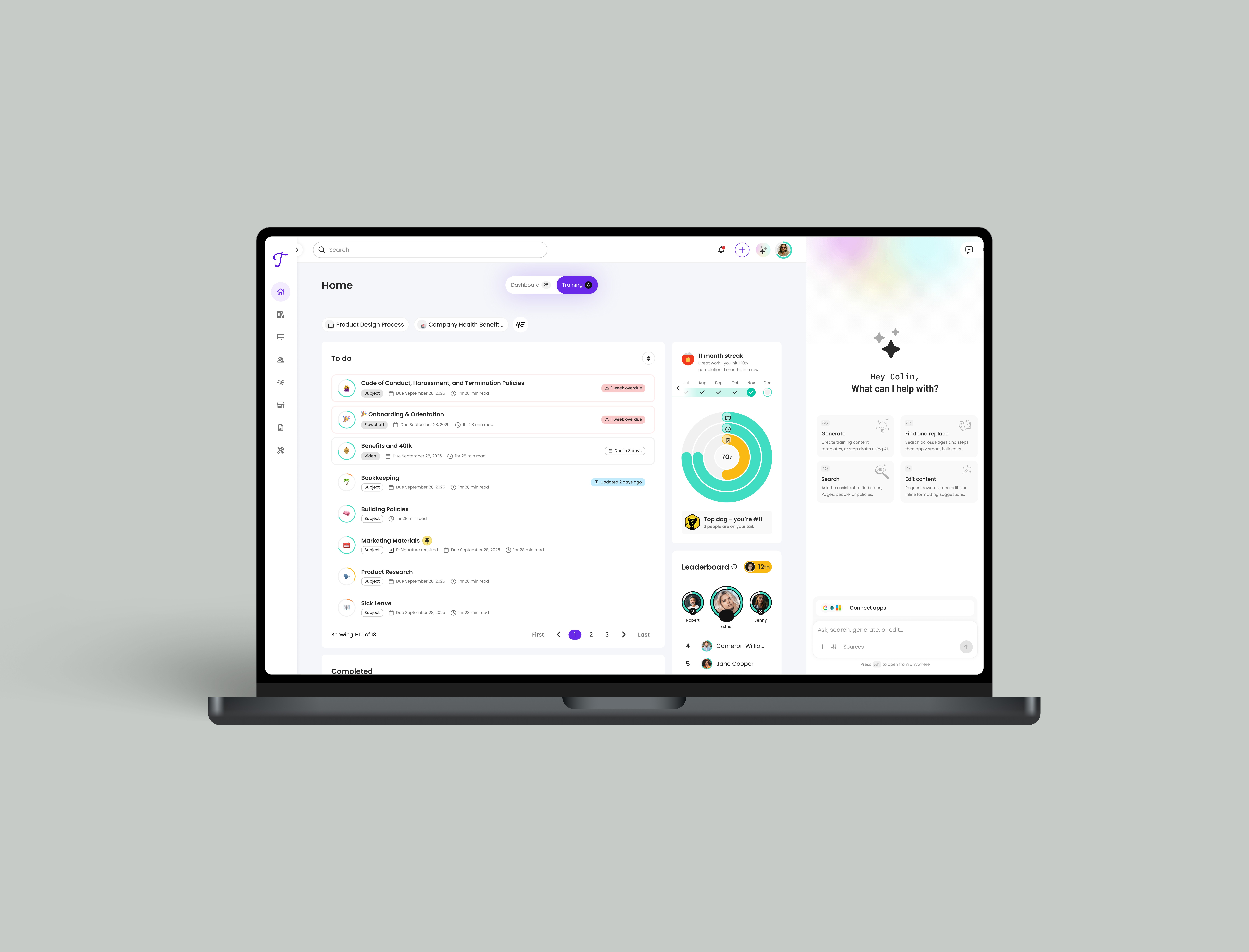
Trainual needed to evolve from a structured knowledge platform into an AI-powered product experience. Embedding a fully integrated assistant directly into the application to support content creation, editing, search, and contextual guidance. The initiative came with real constraints: a compressed timeline driven by competitive market pressure, the need to layer AI onto a system that was not originally built for it, ongoing LLM experimentation happening in parallel with design, and the challenge of maintaining user trust while introducing generative capabilities at scale. The problem was not simply adding a chat interface. It was embedding intelligence into established workflows in a way that felt native, scalable, and trustworthy... and doing it fast.
Trainual needed to evolve from a structured knowledge platform into an AI-powered product experience. Embedding a fully integrated assistant directly into the application to support content creation, editing, search, and contextual guidance. The initiative came with real constraints: a compressed timeline driven by competitive market pressure, the need to layer AI onto a system that was not originally built for it, ongoing LLM experimentation happening in parallel with design, and the challenge of maintaining user trust while introducing generative capabilities at scale. The problem was not simply adding a chat interface. It was embedding intelligence into established workflows in a way that felt native, scalable, and trustworthy... and doing it fast.
Trainual needed to evolve from a structured knowledge platform into an AI-powered product experience. Embedding a fully integrated assistant directly into the application to support content creation, editing, search, and contextual guidance. The initiative came with real constraints: a compressed timeline driven by competitive market pressure, the need to layer AI onto a system that was not originally built for it, ongoing LLM experimentation happening in parallel with design, and the challenge of maintaining user trust while introducing generative capabilities at scale. The problem was not simply adding a chat interface. It was embedding intelligence into established workflows in a way that felt native, scalable, and trustworthy... and doing it fast.
03 - Process
03 - Process
03
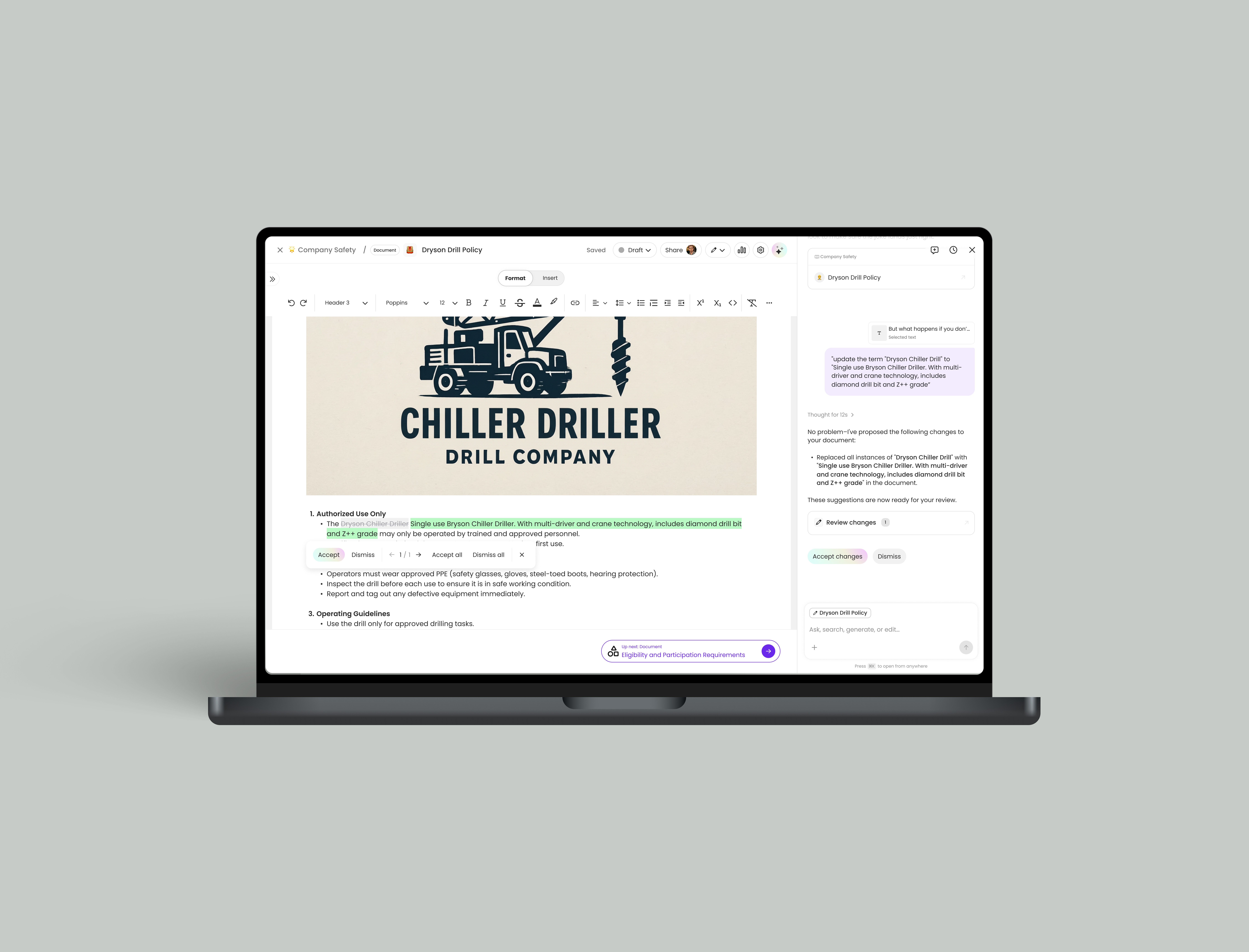
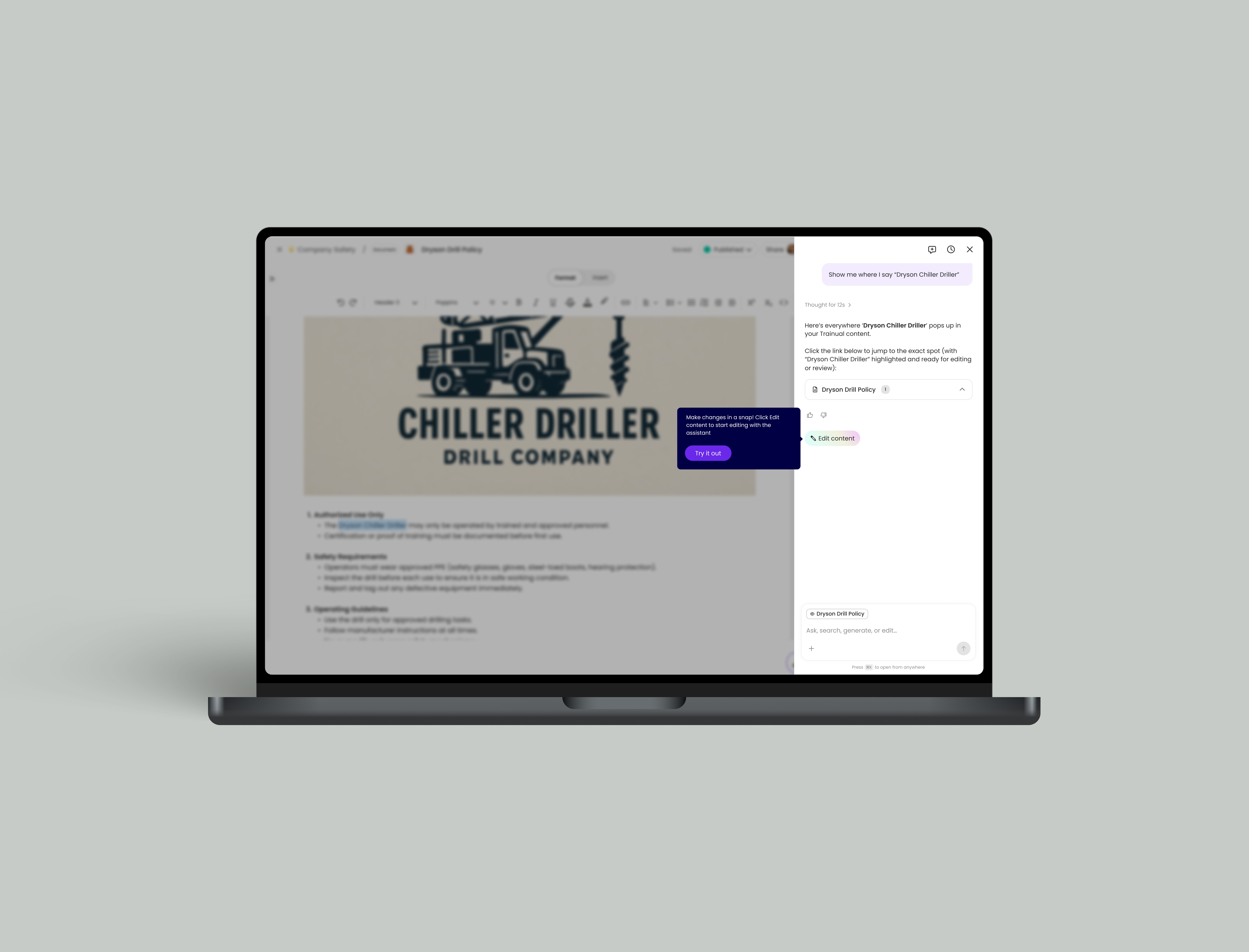
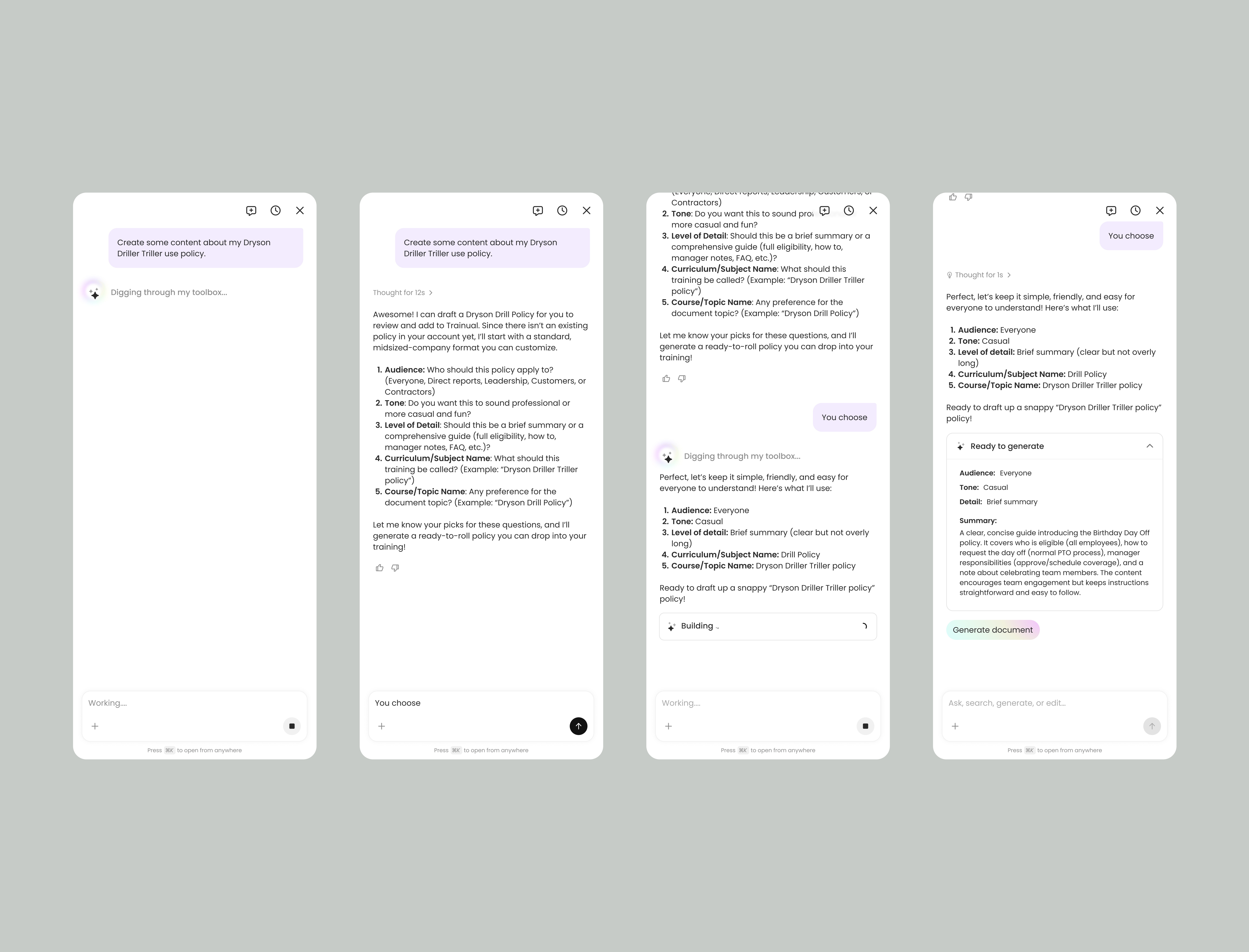


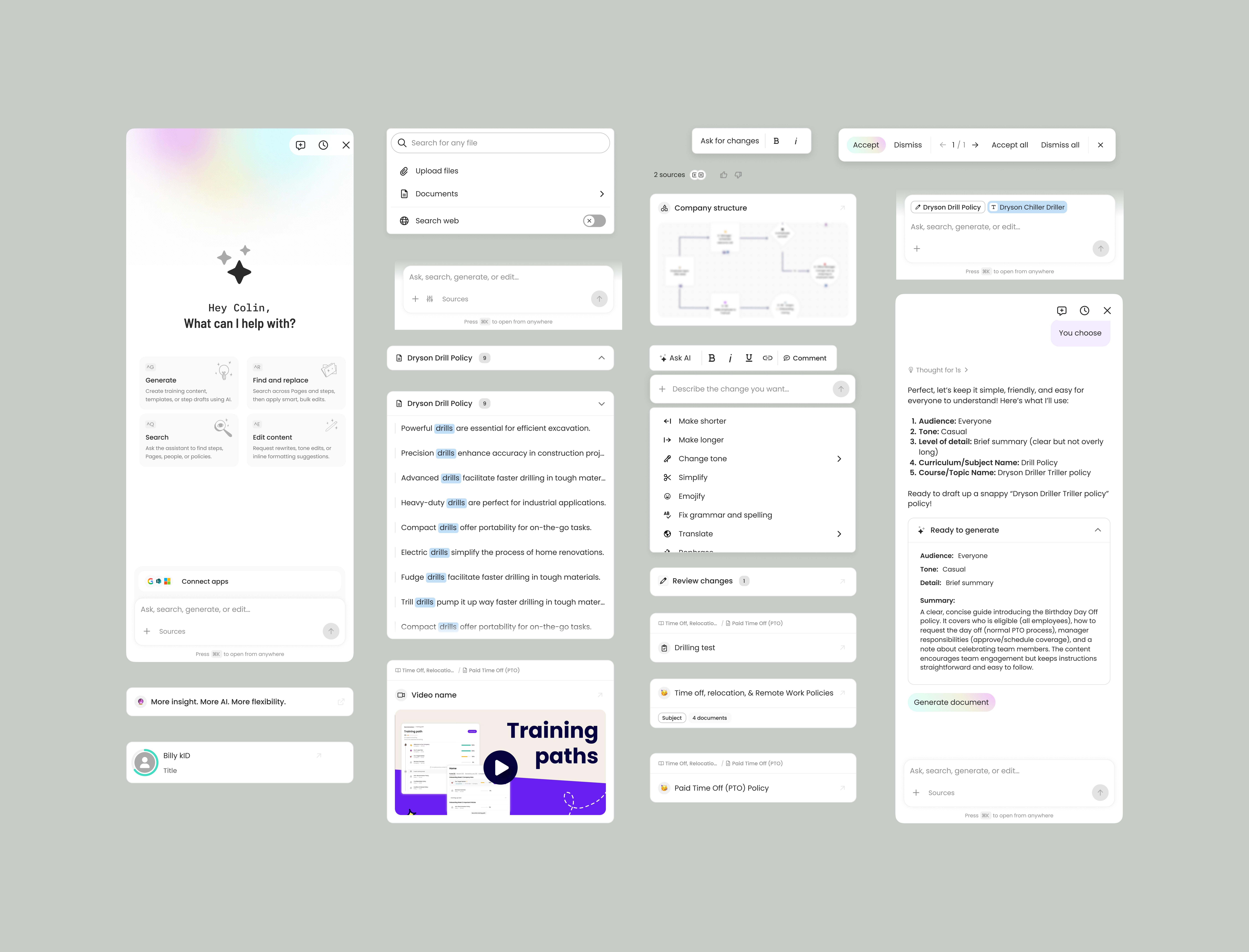
I began by building a dedicated AI component library and visual language that aligned with our existing design system. This included modular UI patterns for chat, inline editing, generation states, and trust indicators. To accelerate iteration, I leveraged both traditional workflows and AI-assisted tooling, including Figma Make and Replit, and connected the Figma MCP to our component library to maintain design-to-code alignment. We tested multiple LLM configurations, refined system prompts, and adjusted UX flows based on real customer usage. The most complex challenge was embedding AI into legacy workflows without disrupting familiarity. We integrated intelligence into existing surfaces rather than forcing new interaction paradigms.
I began by building a dedicated AI component library and visual language that aligned with our existing design system. This included modular UI patterns for chat, inline editing, generation states, and trust indicators. To accelerate iteration, I leveraged both traditional workflows and AI-assisted tooling, including Figma Make and Replit, and connected the Figma MCP to our component library to maintain design-to-code alignment. We tested multiple LLM configurations, refined system prompts, and adjusted UX flows based on real customer usage. The most complex challenge was embedding AI into legacy workflows without disrupting familiarity. We integrated intelligence into existing surfaces rather than forcing new interaction paradigms.
I began by building a dedicated AI component library and visual language that aligned with our existing design system. This included modular UI patterns for chat, inline editing, generation states, and trust indicators. To accelerate iteration, I leveraged both traditional workflows and AI-assisted tooling, including Figma Make and Replit, and connected the Figma MCP to our component library to maintain design-to-code alignment. We tested multiple LLM configurations, refined system prompts, and adjusted UX flows based on real customer usage. The most complex challenge was embedding AI into legacy workflows without disrupting familiarity. We integrated intelligence into existing surfaces rather than forcing new interaction paradigms.
04 - Results
04
15% conversion rate on AI-assisted content creation at launch. ARR growth is tied directly to AI feature adoption, contributing to record company profitability during the transition. Improved customer retention as users adopted AI workflows into their regular content creation process. The AI component library and interaction patterns I established became the standard system across all AI features, eliminating the need to design from scratch for subsequent releases.
15% conversion rate on AI-assisted content creation at launch. ARR growth is tied directly to AI feature adoption, contributing to record company profitability during the transition. Improved customer retention as users adopted AI workflows into their regular content creation process. The AI component library and interaction patterns I established became the standard system across all AI features, eliminating the need to design from scratch for subsequent releases.
15% conversion rate on AI-assisted content creation at launch. ARR growth is tied directly to AI feature adoption, contributing to record company profitability during the transition. Improved customer retention as users adopted AI workflows into their regular content creation process. The AI component library and interaction patterns I established became the standard system across all AI features, eliminating the need to design from scratch for subsequent releases.